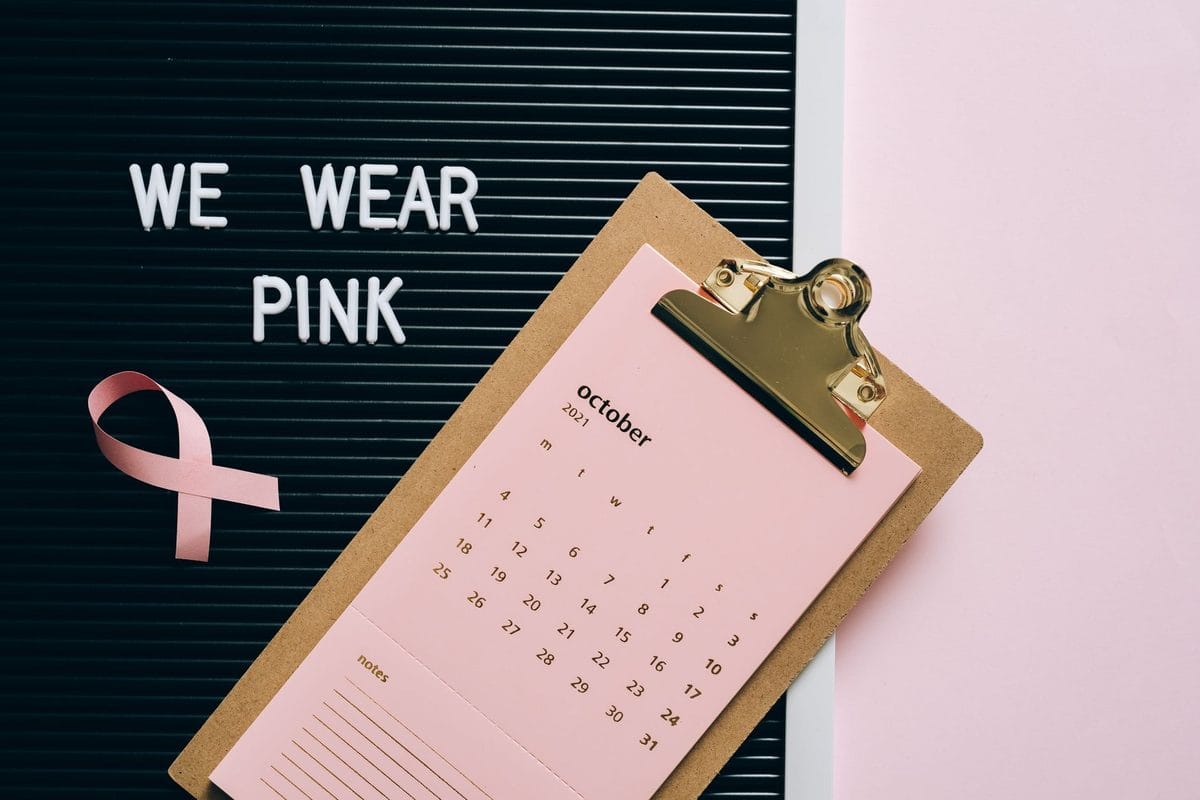
Somewhere between your 50th and 53rd birthdays, a letter arrives with a date, a time and an address already filled in. More than a third of the women who open that first letter do not take up the appointment: in 2024-25, according to Breast Cancer Now's analysis of NHS England data, 63.6 per cent of first-time invitees attended, compared with 89.1 per cent of women who had been screened in the previous five years. The charity says worries and misconceptions about the process can put first-timers off. October is Breast Cancer Awareness Month, so here is what the appointment involves, what the letter afterwards means, and what to do in the three years between mammograms.
Who is invited, and what to do if the letter never comes
Everyone registered with a GP as female is invited from the age of 50 up to their 71st birthday, with the first invitation arriving between 50 and 53 and another every three years after that. The letter comes with an appointment already booked, so the system depends on your GP surgery holding the right details; the NHS England guide asks you to make sure it has your current address, mobile number and email, which is worth a quick call if you have moved or changed phone. If nothing has arrived by 53, or it has been more than three years since your last screening and you think you are overdue, ring your local breast screening service rather than waiting. After 71 you are no longer invited automatically, but you can carry on having screening every three years if you ring the service and ask. Trans and non-binary people are invited according to the sex registered with their GP surgery. All of this describes England; Scotland, Wales and Northern Ireland run their own programmes, so check ages and intervals locally.
The 30 minutes, step by step
The screening itself is the least dramatic part of the whole process.
A mammographer, who will be female, checks your details and asks whether you have had any breast problems, and you then undress above the waist in private. She places one breast on the X-ray machine, which means touching it, and the breast is squeezed between two pieces of plastic to keep it still for a few seconds while the picture is taken. Each breast is X-rayed twice, once from above and once from the side. NHS guidance puts the whole appointment at no longer than 30 minutes, often quicker. The NHS is straightforward about the downside: screening is often uncomfortable and sometimes painful for some people, although the discomfort should not last long. Tell the mammographer at the start if you are nervous, because she is trained to help you feel more comfortable and you can ask her to stop at any time. Some appointments are in mobile units, which the NHS says can be parked somewhere as ordinary as a supermarket car park.
- Wear a top with trousers or a skirt rather than a dress or jumpsuit, since everything above the waist has to come off.
- Leave off deodorant, antiperspirant and talcum powder that morning because they can interfere with the pictures, and keep the deodorant in your bag for afterwards.
- Take off necklaces and nipple piercings.
- Tell the service beforehand if you have breast implants (you may need an extra X-ray), a pacemaker, are pregnant or breastfeeding, have had a mammogram in the last six months, or need adjustments such as a longer appointment or a different location.
If the pre-booked slot clashes with work, ring the number on the letter and move it. That costs one phone call, whereas letting it lapse is how a three-year gap quietly becomes six.
What the result letter says
Results normally arrive by letter within two weeks, with a copy sent to your GP, and the NHS is explicit that a longer wait does not mean something is wrong. Most letters say that no further tests are needed. A small number ask you back, and that second appointment is where the figures deserve a close look, because it is the point at which most people assume the worst.
| Result | Out of every 100 people screened | What happens next |
|---|---|---|
| No further tests needed at this time | 96 | Invited again in three years, if you are under 71 |
| Called back for further tests | 4 | An assessment appointment: an examination, more mammograms, an ultrasound scan or a needle biopsy |
| Breast cancer diagnosed after those tests | 1 of those 4 | The specialist team explains the results and the treatment options |
Three of the four people called back do not have breast cancer, and the recall letter gives a number for a breast care nurse who can talk it through before the assessment. A clear letter is not a guarantee either, since the NHS England leaflet says plainly that it does not rule out developing breast cancer in the future. Across England in 2024-25, NHS England Digital counted 19,291 women aged 45 and over with cancers detected through screening, or 9.0 for every 1,000 screened, which averages out at more than 50 a day.
The honest downsides
Screening is not free of harm, and the NHS says so on its own pages. The main risk is overdiagnosis: doctors cannot always tell whether a cancer will turn out to be life-threatening, so everyone diagnosed is offered treatment, and some of that treatment will be for cancers that would never have caused harm. Mammograms also miss some cancers that are there, cancers can appear in the gap between appointments, and the NHS notes that having a mammogram every three years for 20 years gives a very slightly higher chance of getting cancer over a lifetime because of the small dose of radiation. Most people, it adds, judge the benefits to outweigh the risks.
The best recent evidence on the trade-off is a 2026 study in the British Journal of Cancer, which followed 2,509,384 women, aged 49 to 64 when they entered, for up to 33 years. Attending screening was associated with 33 per cent lower breast cancer mortality than never being invited, and with a 4 per cent excess of diagnoses, which the authors treat as their estimate of overdiagnosis. The catch is that this is an observational study, and its overdiagnosis figure comes from the programme's early years, when screening used one-view film mammography and stopped at 64. The authors say today's programme may produce slightly more, and the 2012 independent review for Cancer Research UK and the Department of Health reached a higher estimate. Breast Cancer Now puts the programme's impact at around 1,300 deaths from breast cancer prevented each year in the UK. On that evidence, go when you are invited.
Between mammograms: the monthly check
Cancer can develop between mammograms, so the NHS asks you to check your breasts or chest about once a month. Look in a mirror with your arms by your sides and then raised, then feel each breast in a circular motion all the way up to your collarbone and under each armpit, using a mix of light and firmer pressure that stops short of hurting, and feel around and over each nipple. The shower or lying down both work, and a fixed date such as the first of the month stops it drifting. What you are looking for is change from your own normal, because breasts alter across the menstrual cycle, in pregnancy and breastfeeding, and after menopause, and it is common for one to be a different size from the other. The NHS list of changes includes:
- a lump or swelling in the breast, chest or armpit
- dimpling that may look like orange peel, or redness, which can be harder to see on black or brown skin
- a change in the size or shape of one or both breasts
- nipple discharge, which may have blood in it, if you are not pregnant or breastfeeding
- a nipple turning inwards, or a rash on it that looks like eczema
- Pain on its own is not usually a sign of breast cancer, but pain in the breast or armpit that does not go away should be checked.
Any of these means a GP appointment, and the NHS says to go even if you have recently been screened. Ask reception for an urgent appointment rather than waiting for the next invitation. Lumps are very common and can have other causes, but only a GP can tell you which. Men and trans people are not exempt, and Cancer Research UK counts around 420 new breast cancer cases in men in the UK each year.
When the standard route does not fit
The NHS lists several things that raise the chance of breast cancer: several close relatives who have had breast or ovarian cancer, a change in a gene such as BRCA1, BRCA2 or TP53, and dense breast tissue. If any of that applies, speak to a GP, who may refer you to a genetic specialist; depending on your level of risk, you might then be invited before 50, screened more often than every three years, or offered MRI scans as well as mammograms. The standard invitation is triggered by age, so if breast or ovarian cancer runs in your family, say so to your GP rather than waiting for a letter.
What you can change, and what you cannot
Cancer Research UK estimates that 23 per cent of breast cancer cases in the UK are preventable, with 8 per cent linked to alcohol and another 8 per cent to overweight and obesity. The NHS England guide's advice is to avoid drinking more than 14 units of alcohol a week and keep to a healthy weight. If cutting back is the sticking point, our piece on drinking less without going dry is a place to start. The other side of that 23 per cent is less comfortable, because it means most breast cancers are not explained by these factors at all, and plenty of people who do everything right are still diagnosed.
If you have missed one
If you missed an invitation, contact your local breast screening service and book; the NHS says you can do so even if the invitation came weeks, months or years ago. An easier route is promised, as Breast Cancer Now notes that the Cancer Plan for England, published earlier this year, commits to inviting women and letting them manage appointments through the NHS App by 2028. Until then, spend five minutes ringing your GP surgery and asking them to read back the mobile number and address they hold for you, because the invitation goes wherever that record says.