It is three in the morning, a child has been sick on the landing carpet, and the first instinct is to reach for the hand gel on the shelf. That instinct is wrong, and so is the one that arrives two days later, when the sickness has stopped, everyone feels fine and Monday looks like a good day to go back to work. Norovirus, the so-called winter vomiting bug, spreads through households and offices precisely because the usual common sense about hygiene and recovery does not fit it. The two mistakes above account for most of the second and third cases in a family, and both are easy to avoid once you know what the NHS and the UK Health Security Agency actually say.
What you are dealing with
Norovirus causes sudden sickness and diarrhoea, and it can also bring a high temperature, a headache, tummy pain and aching limbs. The NHS describes it as unpleasant but usually over in about two days, and the UKHSA says most people recover fully within two to three days without any medicine. Despite the nickname, you can catch it at any time of year, but autumn and winter are when it circulates most widely in schools, nurseries, hospitals and care homes. The incubation period is usually 12 to 48 hours, which is why a household can go from one case to three in the space of a weekend. It spreads through close contact with someone who is ill, through touching surfaces that carry the virus and then touching your mouth, through food prepared by an infected person and through unclean water. None of those routes needs a dramatic event: a shared bathroom and a shared tea towel are enough.
Because several genotypes circulate at the same time, you can catch norovirus more than once in a short period. Limited immunity to one strain does not protect you from the next one, so a bad week in October does not buy you a quiet winter.
Mistake one: trusting the hand gel
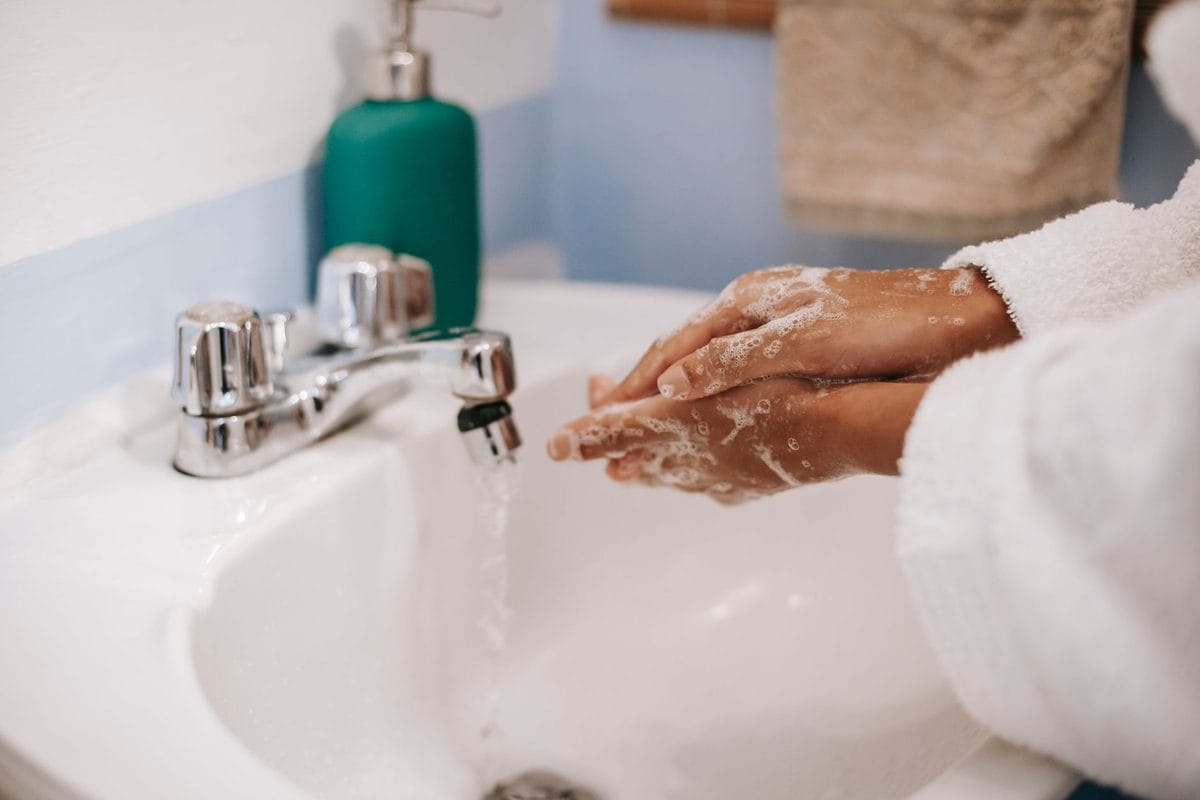
Alcohol-based hand sanitisers do not kill norovirus. Both the NHS and the UKHSA say so in plain terms, and the advice is to wash your hands with soap and warm water after using the toilet, before eating or preparing food and after cleaning up vomit or diarrhoea. The gel on the shelf is fine for an ordinary day, and it does nothing useful against this particular virus, so it should not be what stands between a sick child and the rest of the house.
In practice, the sink does the work. Soap and running water for as long as it takes to sing a short song, then a clean towel that nobody else touches, and a rule that the sick person's towel goes in the wash that day. If you are caring for someone who is ill, wash your hands every time you leave the room, not just when they look dirty.
Mistake two: reading the 48-hour rule as a suggestion
You are most infectious while you have symptoms, but you can pass the virus on before they start and after they stop. That is why the guidance is to stay at home until 48 hours after the last episode of vomiting or diarrhoea, and to avoid preparing food for other people for the same period, because you may still be shedding the virus. The NHS adds that you should not visit hospitals or care homes until you have gone two days without being sick or having diarrhoea, and the UKHSA asks you not to turn up at your GP surgery or hospital while you are symptomatic: phone, or use NHS 111, instead.
| Stage | Typical timing |
|---|---|
| Exposure to symptoms | 12 to 48 hours |
| Symptoms | 1 to 3 days |
| Stay at home after the last symptom | 48 hours |
Put those together and an illness that lasts two days means roughly four days away from work or school, counted from the first bout. Most people lose the argument with themselves on day three, when they feel well enough to hurry back, and that is the day on which they are still spreading the virus. If you handle food for a living, the rule matters even more: do not cook for colleagues or customers until the 48 hours are up.
Cleaning: the one time bleach earns its place
Norovirus survives on surfaces for days or even weeks, which is why a contaminated door handle can start a second wave long after the first person has recovered. The UKHSA recommends cleaning and disinfecting with a bleach-based solution, wearing disposable gloves where possible, and gives a typical strength of 0.1% sodium hypochlorite, which is 1,000 parts per million. Household bleach varies by brand, so check the strength on the label: our own arithmetic puts a product at 5% at roughly 20ml to a litre of water, but follow the instructions on the bottle first.
The surfaces to start with are the ones hands touch: toilet seat and flush handle, taps, bathroom door handles, the light switch and the fridge door. Contaminated clothes and bedding go in the wash at 60°C, separately from everything else, using normal washing powder, and the NHS and UKHSA both suggest disposable gloves for handling them. A caution that belongs here: never mix bleach with other cleaning products, ventilate the room and test it on a hidden patch of any fabric or surface that might mark, because it will bleach colour as well as kill the virus.
Looking after someone without catching it
If one person in the house is ill, give them a bathroom of their own if you can, and if you cannot, wipe the seat, flush handle, taps and door handle with a bleach-based product after each visit. The carer should wash hands with soap and water before touching food, after contact with the patient and after handling their washing, and should keep the sick person away from the kitchen until the 48 hours are up. Children who are ill should not go to school or nursery until two days have passed without sickness or diarrhoea, which is the NHS wording and is stricter than many parents expect. If you must share a room, open a window when you can, wash bedding as soon as it is soiled and put the dirty washing in a bag rather than carrying it through the house in your arms.
What to drink, and what to avoid
There is no specific treatment for norovirus, and antibiotics do nothing because it is a virus. The aim is to stay hydrated, since vomiting and diarrhoea strip the body of water and salts. The NHS advice is to drink lots of fluids, in small sips if you feel sick, to eat when you feel able to and to avoid fatty or spicy food for a while. Paracetamol can help with aches and a temperature; check the leaflet before giving it to a child. Fruit juice and fizzy drinks can make diarrhoea worse, so leave them in the cupboard. Do not give anti-diarrhoea medicine to children under 12 and do not give aspirin to anyone under 16.
If you or a child over five show signs of dehydration, such as dark, smelly urine or peeing less than usual, a pharmacist can recommend oral rehydration powder. That is also true for older people and those with a weakened immune system, who tend to dehydrate faster, and it is worth knowing before it happens: the pharmacy on your high street is the right first stop, not the A&E waiting room.
When it is not just a bug
Call 111 if you are worried about a baby under 12 months, if a child stops breast or bottle feeding while ill, if a child under five has signs of dehydration such as fewer wet nappies, or if anyone keeps being sick and cannot keep fluid down. Call it too for bloody diarrhoea or bleeding from the bottom, and for diarrhoea lasting more than seven days or vomiting lasting more than two. Call 999 or go to A&E if someone vomits blood or something that looks like ground coffee, has green vomit, has a stiff neck with pain in bright light, has a sudden severe headache or tummy ache, or is confused or struggling to breathe.
Those lists look long, and almost none of them will apply to you. They are worth reading once now, while nobody is ill.
A sensible plan for this autumn
- Keep soap at every sink, and agree with the household that the answer to "I feel better" is a clock, not a feeling.
- Buy a bottle of bleach-based cleaner and a box of disposable gloves before you need them, because nobody wants to shop at three in the morning.
- If you live with a baby, an older relative or someone with a weak immune system, ask your pharmacist now what rehydration powder they stock.
- Put the 48-hour rule in the family group chat, so that the person who feels fine on Monday is not the one deciding.
The better habit is simple, and it works every winter: soap, a clock and a bottle of bleach. None of them is glamorous, and none of them needs a prescription.