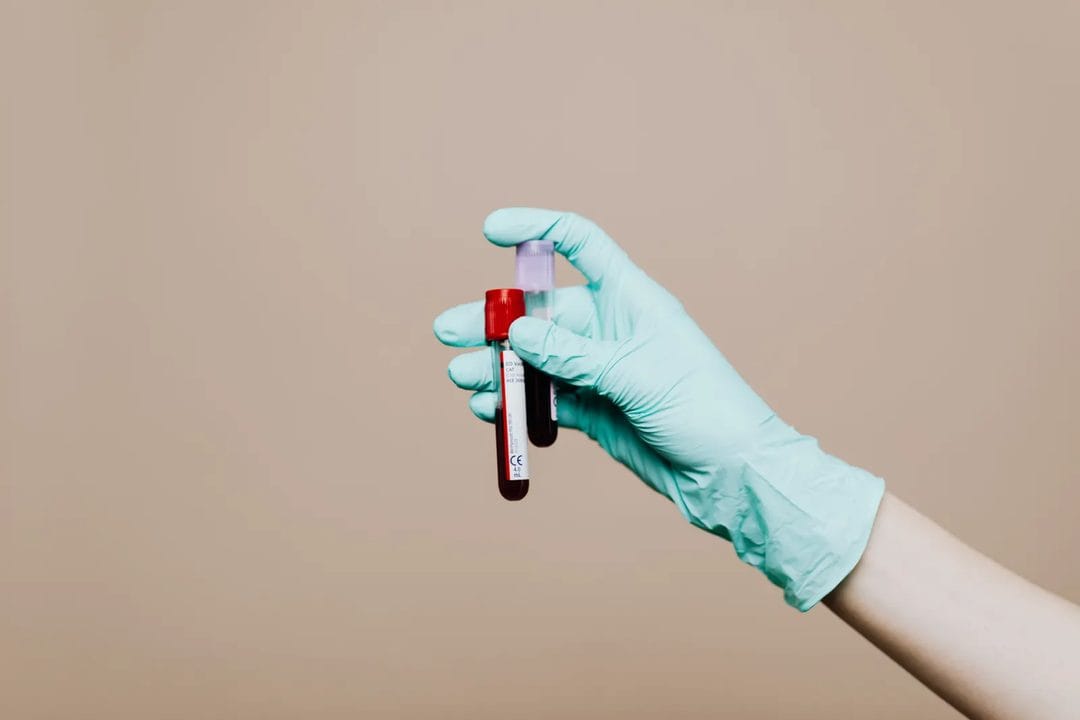
By the third week of September, the tiredness that a summer holiday was supposed to fix has usually settled into something duller and more permanent. You've slept eight hours. You've cut back on weeknight wine. And you still can't get through a 4pm meeting without your eyes glazing over, despite a GP blood test that came back marked "normal". For a striking number of people, particularly women under 50, the explanation sitting just outside that normal range is iron deficiency without anaemia — and it's one of the more quietly contested corners of UK primary care right now.
The Gap Between "Normal" and "Fine"
Most people assume a blood test for tiredness checks their iron levels directly. It doesn't, not really. The standard full blood count measures haemoglobin, the oxygen-carrying protein in red blood cells, and flags anaemia only once haemoglobin drops below roughly 120 g/L in women or 130 g/L in men. Iron stores can fall a long way before haemoglobin follows — your body strips ferritin, the storage protein, right down to empty before it lets red cell production suffer. That means someone can be profoundly iron-depleted, with all the fatigue, breathlessness on stairs and hair coming out in the shower that implies, while their haemoglobin sits comfortably inside the reference range. The GP reads "no anaemia" and moves on to ruling out thyroid problems or depression instead.
Ferritin is the test that actually tracks the storage tank, and this is where the real argument sits. Most UK labs flag deficiency only below 15 micrograms per litre — a threshold set decades ago to catch full-blown anaemia risk, not to catch the tired-but-not-anaemic patient sitting in front of a GP today. A growing body of haematologists, including several who contribute to NICE's Clinical Knowledge Summaries, argue that anyone with fatigue symptoms and a ferritin under 30 should be treated as iron deficient, and some go further and put the useful cut-off closer to 50 for people with heavy periods, restless legs or unexplained hair loss. That's not a fringe position any more, but it hasn't fully filtered down to how every high-street GP interprets a lab printout, and the gap between the textbook threshold and the clinically useful one is exactly where a lot of exhausted people get told their bloods are fine.
Who Actually Falls Into This Gap
Menstruating women are the obvious group, and for a specific, unglamorous reason: a heavy period can strip 60–80ml of blood a cycle, compared with a typical 30–40ml, and most people have no real benchmark for what "heavy" means until someone asks them to count soaked pads per hour. Pregnancy and the two years after birth deplete iron stores further, often into a woman's late thirties before anyone flags it, since the baby draws on maternal iron reserves through the third trimester regardless of what the mother eats. Vegetarians and vegans are at higher risk too — not because plant iron is useless, but because non-haem iron from lentils, spinach and fortified cereal is absorbed at roughly a third the rate of the haem iron in red meat, and needs vitamin C alongside it to work at all. Endurance runners lose iron through a process called footstrike haemolysis, where red blood cells rupture on impact with every stride, on top of iron lost in sweat during longer sessions. Blood donors who give three or four times a year without gaps long enough to rebuild stores are a group GPs rarely think to ask about, yet the NHS Blood and Transplant service itself now flags low ferritin as the single most common reason donors get deferred. And anyone on long-term omeprazole or another proton pump inhibitor for reflux is quietly blocking a chunk of their own iron absorption, because stomach acid is what converts dietary iron into a form the gut can actually take up.
None of this means every tired person needs an iron test. But if you tick two or more of those boxes and you've been dismissed with "your bloods are normal" after nothing more than a standard full blood count, ask specifically for ferritin, and ask what number it came back as rather than just whether it was flagged.
The Symptoms That Get Waved Away
Fatigue is the headline symptom, but it's rarely the one that gets someone to a GP on its own — everyone's tired, and doctors know it. The symptoms that should raise suspicion of iron deficiency specifically are more distinctive: restless legs at night that have nothing to do with caffeine, hair loss that shows up as extra strands on the pillow rather than a receding hairline, brittle nails that spoon slightly at the tips (a sign called koilonychia), a sore or unusually smooth tongue, and pica — cravings for ice, chalk or raw pasta that have no obvious explanation. Cold hands and feet that persist indoors are another tell, along with a specific kind of breathlessness on stairs that wasn't there a year ago. Taken individually, any one of these gets shrugged off. Taken together, in someone with a plausible cause — heavy periods, a plant-based diet, a recent pregnancy — they add up to a pattern that's worth naming out loud to a GP rather than describing vaguely as "just tired all the time".
Getting the Right Test, and Reading It Properly
Ask for a ferritin test by name, ideally alongside a C-reactive protein (CRP) reading taken at the same time. This matters because ferritin is also an acute-phase protein — it rises during infection or inflammation, which can mask a genuine deficiency and produce a falsely reassuring number. A ferritin of 40 during a cold or a flare-up of joint pain might represent a true level closer to 15 once the inflammation settles, which is why a single test taken while you happen to be under the weather can be misleading. If your GP surgery offers online access to test results, as most do now through the NHS App, look at the actual figure rather than just the "normal" flag next to it — a result of 18 μg/L sits inside most labs' reference range but is well below what most iron specialists would call adequate for someone with fatigue and restless legs.
Full disclosure: this isn't a call to self-diagnose and order iron supplements off Amazon without a test first. Iron overload is a real and under-discussed risk, particularly in men and postmenopausal women, and haemochromatosis — a genetic condition causing iron to build up to toxic levels — affects roughly one in 150 people of Northern European ancestry. Taking iron you don't need doesn't just waste money; it can genuinely harm you over years of accumulation. Test first, always.
What Treatment Actually Involves
Once deficiency is confirmed, GPs typically start with ferrous sulfate or ferrous fumarate tablets, usually 200mg taken once daily rather than the twice- or three-times-daily dosing that was standard a decade ago. That change follows a run of trials out of ETH Zurich, published between 2017 and 2020, showing that alternate-day dosing — or a single daily dose — actually improves absorption compared with the old twice- or three-times-daily regimen: iron tablets trigger a hormone called hepcidin that blocks further absorption for roughly 24 hours, so piling on a second or third dose the same day is largely wasted. Take the tablet with a source of vitamin C, such as a glass of orange juice, and well away from tea, coffee or calcium supplements, which can each cut absorption by more than half. Constipation and nausea are common enough that a meaningful share of people quietly stop taking their tablets within a month, which defeats the point entirely — if ferrous sulfate isn't tolerated, ferrous fumarate or a liquid formulation such as Spatone are worth asking about before giving up on oral iron altogether. Expect a repeat ferritin check at around twelve weeks, not two or three, because red blood cells take roughly that long to fully turn over and an earlier test will understate genuine progress. For people who can't tolerate any oral form, or whose ferritin stays stubbornly low after three months of correctly-timed tablets, an IV iron infusion — Ferinject or Monofer, given in a single hospital or clinic visit — corrects levels far faster and sidesteps the gut entirely, though it's usually reserved for more severe or treatment-resistant cases rather than a first-line option. Private clinics increasingly offer the same infusions for people unwilling to wait for an NHS referral, typically for £250–£400 a session, though that route is worth approaching carefully rather than as a shortcut around a proper diagnosis.
Food Alone Rarely Closes a Real Gap
Diet advice for iron deficiency tends to focus on red meat, and red meat genuinely is the most efficient source — a 100g portion of lean beef provides around 2.7mg of readily-absorbed haem iron, against an adult woman's daily requirement of 14.8mg. But building a whole eating pattern around liver and steak is neither realistic nor, for many people, appealing, and it's worth being honest that food changes alone rarely correct an established deficiency within a useful timeframe. Dark leafy greens, lentils, beans and fortified breakfast cereals all contribute, and pairing them with a vitamin C source — peppers, citrus, tomatoes — roughly doubles how much of that non-haem iron your gut actually absorbs. Diet is worth optimising as a long-term habit once levels are corrected; it's a poor tool for fixing a genuine deficiency on its own, and treating it as one is how people end up eating more spinach for six months while staying just as exhausted.
If the tiredness that should have lifted with the summer is still there in October, the honest first move isn't a supplement aisle or another early night — it's a specific request to your GP for a ferritin number, not just a tick-box on a standard blood count.