Ask a GP what they actually check for when they shake your hand, and most will admit it is not just manners. A weak, slack handshake has quietly become one of the more useful early warning signs in medicine — not because doctors are obsessed with etiquette, but because grip strength turns out to predict far more about your health than most people would guess. It is cheap to measure, takes about ten seconds with a simple dynamometer, and according to a growing body of research, tracks with your risk of heart disease, dementia, disability and early death better than several tests that get far more attention in a routine check-up.
That claim sounds like exactly the kind of thing that gets overstated in health journalism, so it is worth being precise about where it comes from. The finding that put grip strength on the map was the PURE study — the Prospective Urban Rural Epidemiology study, published in The Lancet in 2015, which followed roughly 140,000 adults across 17 countries. Grip strength, measured with a handheld dynamometer, predicted all-cause mortality more strongly than systolic blood pressure did. Since then, UK Biobank data covering hundreds of thousands of participants has repeatedly linked lower grip strength to higher rates of cardiovascular disease, respiratory illness, cognitive decline and earlier death, independent of age, smoking status and existing illness. None of this means a weak grip causes any of these things directly. It means grip strength is an unusually honest summary of something harder to measure on its own: how much functioning muscle you are carrying, how well your nervous system is driving that muscle, and how much physiological reserve your body has left to draw on when something goes wrong.
Why a handshake tells doctors so much
Grip strength is not really about the hand. Squeezing a dynamometer recruits forearm and hand muscles, yes, but the signal it produces depends on the whole chain behind that squeeze: motor neurons firing cleanly from the brain down the spinal cord, muscle fibres that have not been lost to age or inactivity, and a cardiovascular system healthy enough to deliver oxygen to working tissue on demand. Because grip strength correlates so closely with total-body muscle mass — hand strength and, say, quadriceps strength tend to rise and fall together in the same person — a dynamometer reading works as a fast proxy for overall strength, which is exactly what a full-body strength assessment would take far longer to establish.
That is the appeal for researchers running studies with tens of thousands of participants: you cannot put 140,000 people through a leg-press machine, but you can hand each of them a dynamometer and get a reading in seconds. The convenience turned out to matter less than the signal itself. Muscle is not just for lifting things. It is metabolically active tissue that helps regulate blood sugar, it cushions joints, and — this is the part that surprises people — it functions as a reserve your body draws on during illness, surgery or a long hospital stay. Someone who arrives at a hospital admission with strong muscles has more to lose before that loss becomes dangerous. Someone who arrives already weak has far less room to fall.
What counts as weak, by the numbers
Clinical cut-offs vary slightly between studies, but the widely used definition from the Foundation for the National Institutes of Health sarcopenia project sets weak grip strength at below 26 kg for men and below 16 kg for women, measured on the dominant hand with a calibrated dynamometer. Average grip strength peaks in your late twenties to mid-thirties and then declines gradually — by around 1 to 2 percent a year from midlife onwards, faster after 60 if the muscle is not actively maintained through resistance work. A useful comparison, if you want a rough sense of where you stand without buying equipment: a firm, full handshake from someone who works their hands regularly — a builder, a climber, a keen home cook who has spent years kneading dough — sits well above the weak threshold. A limp, barely-there squeeze from someone who has been sedentary for years often sits right at or below it.
The nuance that gets lost in the headlines
Here is where the story needs a caveat, because grip strength gets reported as though it were a magic number rather than a marker. It is not a cause of anything. Nobody dies from having a weak grip, and building your grip strength in isolation — squeezing a hand gripper while doing nothing else — will not meaningfully extend your life. What the research actually shows is a strong association between low grip strength and outcomes tied to overall muscle loss and inactivity, which is a very different claim from "grip training prevents heart attacks." Muscle mass and cardiovascular fitness tend to move together in real people, and grip strength happens to be a convenient window onto both. Confuse the window with the room and you end up buying a £15 hand gripper thinking it does the job of a proper strength programme.
There is also a chicken-and-egg problem researchers are upfront about: illness itself often causes muscle loss before it is diagnosed, so some of the association between weak grip and poor health reflects early, undetected disease rather than the other way round. A sudden, unexplained drop in your own grip strength over a few months is worth mentioning to a GP for exactly this reason — it is sometimes the first measurable sign that something else is going on.
How GPs and researchers actually measure it
If you want to check your own number rather than guess from a handshake, a hand dynamometer is the only reliable tool — smartphone apps and "squeeze the stress ball and count seconds" methods are not calibrated and are not comparable to the research. Proper technique matters more than people expect: seated, elbow bent at 90 degrees, upper arm tucked against the torso, three maximal squeezes per hand with a short rest between, and the best reading recorded rather than the average. Testing standing up, with the arm extended, or with a warm-up grip beforehand can all inflate or deflate the number by several kilograms, which is why home comparisons between different testing days are only meaningful if you keep the method identical. A basic hand dynamometer costs somewhere between £20 and £40, and some GP surgeries and physiotherapy clinics will test you for free as part of a wider frailty or sarcopenia assessment, particularly for patients over 65.
Building it back
The genuinely useful part of this research is not the diagnosis — it is that grip strength, like most muscle-related metrics, responds quickly to targeted work, usually within 8 to 12 weeks of consistent training. You do not need a gym membership to move the number.
- Farmer's carries — walking a set distance while holding a heavy weight in each hand (a loaded shopping bag works fine at home) trains grip endurance directly and doubles as a full-body stability exercise.
- Dead hangs from a pull-up bar — even 10 to 20 seconds at a time, building up gradually, is one of the most efficient grip-specific exercises there is, and it also decompresses the shoulders.
- Resistance training for the whole body — deadlifts, rows and any exercise that requires you to hold a bar or dumbbell under load will improve grip strength as a side effect, which matters because grip in isolation is a marker of total muscle, not the target itself.
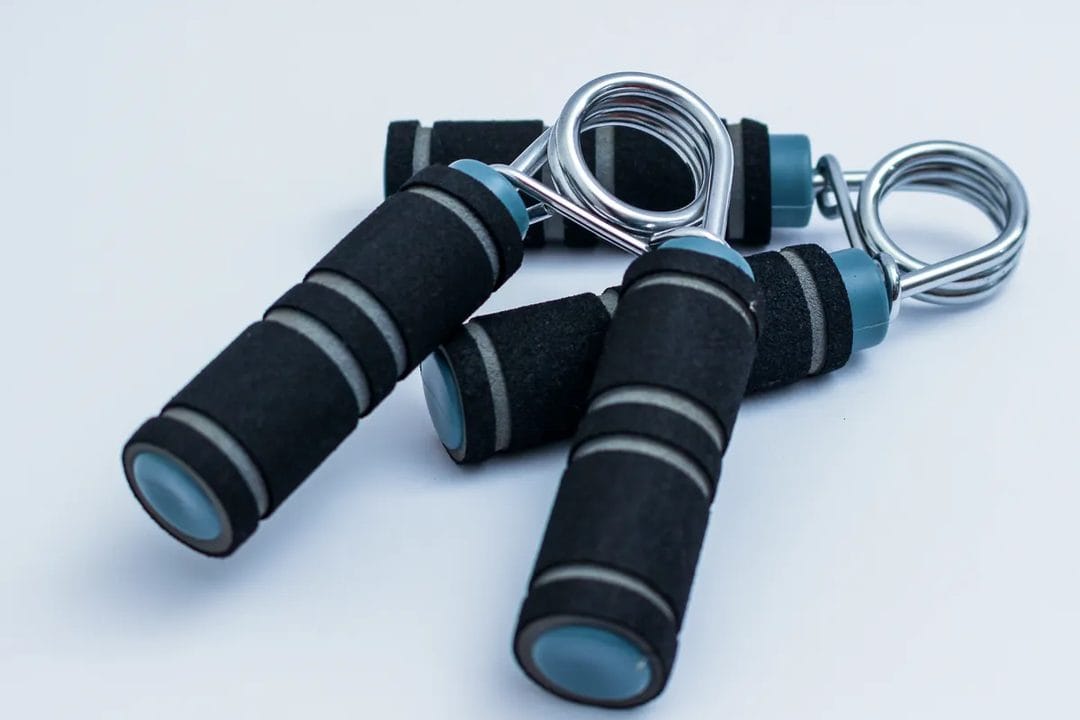
- Hand grippers or a folded tea towel — cheap, portable, useful for daily maintenance reps, but weakest on their own without the exercises above backing them up.
- Everyday tasks done deliberately — carrying both shopping bags in one trip instead of splitting the load, opening jars without a jar-opener when it is safe to do so, gardening with hand tools rather than power tools where practical.
None of this needs to be dramatic. What matters more than any single exercise is consistency and progressive load — a grip that is challenged two or three times a week, gradually asked to hold slightly more than it is comfortable with, improves measurably within a couple of months. That is a shorter timeline than most people assume for a number that took decades to decline.
If there is one thing worth taking from this beyond the numbers, it is a shift in how to think about a routine health check. Blood pressure cuffs and cholesterol panels get the attention because they are familiar, but a ten-second squeeze on a dynamometer is quietly one of the better bargains in preventative medicine — cheap, fast, and honest about something that actually matters: whether your body still has muscle in reserve for the day it needs it.