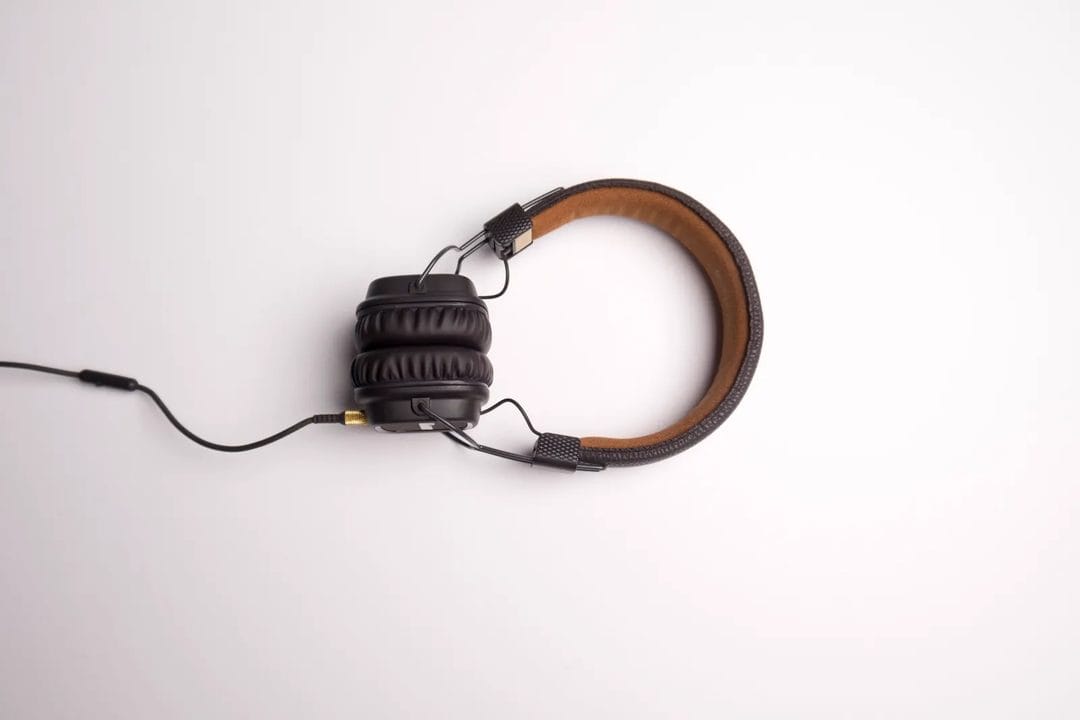
Ask an NHS audiologist what has changed in the past decade and most will mention the same thing: the age of the patients. Presbycusis — the gradual hearing loss that comes with age — used to dominate referral letters for people in their sixties and seventies. Increasingly, clinics in Manchester, Bristol and London are seeing measurable hearing damage in patients in their late twenties and early thirties, the kind of loss that used to take fifty years of ordinary living to accumulate. Nobody handed these patients ear defenders and put them on a factory floor. Most of them just commute, work out and fall asleep to a podcast, all with something jammed into their ears. None of them worked a pneumatic drill or stood next to an aircraft engine. And yet the audiogram in front of the clinician sometimes looks like it belongs to someone forty years older, with the tell-tale notch at 4,000 hertz that has marked noise damage in occupational health charts since the 1970s.
The World Health Organization put a number on the scale of the problem in its 2022 "Make Listening Safe" report: roughly 1.1 billion people aged twelve to thirty-five are at risk of hearing loss because of unsafe listening habits, mostly through personal audio devices and loud venues. That is not a marginal group. It is the demographic that grew up with earbuds as a default accessory rather than an occasional indulgence, and audiologists are now watching the first cohort of that generation walk through the door with results that don't match their date of birth.
The volume creeps up without anyone noticing
Nobody sets out to damage their hearing. It happens through a slow, almost invisible ratchet: the bus is noisy, so the volume goes up two notches; the office has bad acoustics, so it goes up again; six months later, what felt loud at the start now feels like background music. Hearing damage from noise is cumulative and largely painless, which is exactly why it is so easy to ignore — there is no equivalent of the ringing pain you get from a burn, just a slow narrowing of the frequencies you can pick out clearly, usually starting with high-pitched consonants like "s" and "th" long before anyone notices whole words going missing.
Most in-ear headphones, at maximum volume, sit somewhere between 100 and 105 decibels — roughly the level of a chainsaw or a live rock concert, delivered directly into the ear canal rather than across a room. Under the UK's Control of Noise at Work Regulations 2005, employers are legally required to act once staff are regularly exposed to 80 decibels (the lower exposure action value) and must provide hearing protection as standard once exposure reaches 85 decibels. Nobody is enforcing that standard on your commute. You are, in effect, choosing to expose yourself to noise levels that would trigger mandatory ear defenders in a warehouse — except you're doing it voluntarily, for hours a day, with headphones you paid for yourself. A building site foreman who let workers stand that close to a running chainsaw without protection would be shut down by the Health and Safety Executive within a week. Do it to yourself on the Northern Line and nobody so much as raises an eyebrow.
Duration matters as much as volume
Occupational health guidance is built around a rough rule of thumb: every 3-decibel increase in noise roughly halves the safe listening time. Eight hours is considered a reasonable daily limit at 85 decibels; at 100 decibels, that safe window shrinks to about fifteen minutes. Most people listening to music on a packed train at full volume for a forty-minute commute, twice a day, are well past that threshold without registering it as remotely unusual.
Why this generation is different
It isn't the festivals doing the damage — it's the daily commute.
Older patients who show up with noise-induced hearing loss usually have an obvious cause on their record — years on a building site, a stint in the forces, a factory job before ear protection became standard. What audiologists are describing now is diffuse: no single loud event, no obvious occupational exposure, just years of moderate-to-high volume listening stacked on top of gig attendance, gym classes with thumping speakers and the odd festival weekend. RNID (formerly Action on Hearing Loss) has flagged this pattern as a growing concern in its public awareness work, pointing specifically at personal listening devices rather than workplace noise as the dominant modern risk factor for people under forty.
There is a genuine counter-argument worth taking seriously here: some of the apparent rise in early hearing loss is almost certainly better detection rather than a pure increase in actual damage. Free hearing checks at Specsavers and Boots Hearingcare, along with built-in decibel tracking on the Apple Watch and iPhone Health app, mean far more people in their twenties and thirties are getting tested at all — a generation ago, nobody in that age bracket would have thought to book a hearing test unless something had gone dramatically wrong. Some of what looks like a new epidemic is really a new spotlight on a problem that was always there.
What actually protects your hearing
Turn the volume down to 60 percent of maximum and cap listening sessions at around an hour before taking a proper break — that is the single most effective change most people can make, and it costs nothing. Every EU-regulation-compliant device sold in the UK since 2013 follows the EN 50332 standard, which caps the default maximum output at 100 decibels and typically nudges users with a warning once they've been listening loud for too long; don't dismiss that warning as a nag screen, because it is doing exactly the job it was designed for.
Buy proper noise-cancelling headphones rather than turning the volume up to compete with background noise. This is the recommendation audiologists repeat most often, and it works because the real driver of dangerous volume levels usually isn't the music itself — it's the Tube platform, the gym class, or the office chatter you're trying to drown out. A decent pair of active noise-cancelling headphones, from Sony, Bose or Apple's own AirPods Pro, typically runs somewhere between £150 and £300, and the cost pays for itself the first time it stops you cranking the volume to compete with a Central line carriage. Foam earplugs are the cheaper fix for gigs and festivals — a packet of concert-grade filtered earplugs costs under a tenner and cuts volume evenly across frequencies rather than muffling everything, which matters if you still want to hear the band properly.
Skip the volume-limiting apps that don't actually limit anything
A handful of third-party "safe listening" apps on the App Store and Google Play promise to cap output but simply display a warning banner that's easy to swipe away. If you want a real limit, use the built-in operating system controls — Apple's Reduce Loud Sounds setting under Health, or Android's Sound settings equivalent — which enforce a hard ceiling on output rather than a polite suggestion.
When it's worth getting checked
If you regularly ask people to repeat themselves, struggle to follow conversation in a busy pub, or notice a persistent ringing after a gig that used to fade by the next morning and now doesn't, that is worth a test rather than a shrug. NHS audiology referrals typically go through a GP, and while waiting times vary considerably by trust, RNID has repeatedly flagged pressure on NHS audiology services as a growing issue worth planning around rather than assuming a quick turnaround. Specsavers and Boots Hearingcare both offer free hearing checks on the high street with no referral needed, which is a reasonable first step if you want an answer faster than the NHS route allows.
Private hearing aids, if a test does turn up measurable loss, are not cheap: Specsavers and Boots Hearingcare both price their ranges from around £595 per ear up to nearly £3,000 for the most advanced models with Bluetooth streaming and rechargeable batteries. NHS hearing aids remain free once you're in the system, though the range of models on offer is narrower and the waiting list to get there is the real cost. Either way, catching moderate loss early and adjusting listening habits before it progresses is a far better trade than waiting until conversation in a noisy restaurant has become genuinely difficult to follow.
None of this means panic every time you put your earbuds in for the walk to the station. It means treating volume the way you'd treat sun exposure — not something to avoid altogether, but something worth being deliberate about, because the damage it does is silent until it very much isn't.