Booking for this winter's flu vaccine opened on 17 August, weeks earlier in the public conversation than most people expect a winter jab to come up. The timing isn't accidental. A&E departments in England logged a record 2.5 million attendances in July, the third month running to set a new high, and NHS England has been unusually direct about wanting eligible patients vaccinated before flu starts moving through schools and workplaces rather than after.
That's the backdrop the booking system launched against.
The rollout itself is staggered, and the staggering matters if you're trying to work out when you'll actually get a jab rather than just when you can book one. Pregnant women and children are first in line, with vaccinations starting on 1 September — for children this usually means the nasal spray at school or through the GP, and invitations for this first group go out from September via GP practice, the NHS App, or letter. Everyone else in an eligible group, including people aged 65 and over, those with long-term health conditions, care home residents, carers and frontline health and social care staff, moves onto the programme from 1 October. Crucially, the booking window for that October start is open right now, so there's no reason to wait for a letter to land before reserving a slot through the NHS App or the online booking service. Dr Julie Yates of the UK Health Security Agency put it plainly: booking early means being vaccinated in good time, rather than queuing into a system that gets busier the closer it gets to the cold months. Roughly 19 million people in England had a flu jab last winter, and the NHS estimates that vaccination avoided around 104,000 hospital admissions over the same period — numbers worth keeping in mind given how stretched emergency departments already are this summer.
Who actually qualifies this year
Eligibility hasn't been rewritten this year, but it's broader than the "over-65s and asthmatics" shorthand most people carry around in their heads. You qualify for a free NHS flu vaccine if any of the following applies, and it's worth reading the full list rather than assuming you don't fit it:
- You're 65 or over — including anyone who'll turn 65 by 31 March 2027, so the threshold effectively catches people who are still 64 today.
- You're aged 18 to 64 with a long-term condition: asthma that needs a steroid inhaler or tablets, COPD, cystic fibrosis, heart disease, chronic kidney or liver disease, diabetes, Addison's disease, a spleen problem, a learning disability, or a neurological condition such as Parkinson's, MS, motor neurone disease or cerebral palsy.
- Your BMI is 40 or above.
- You're pregnant, at any stage.
- You live in a care home.
- You're the main carer for an older or disabled person, or you receive Carer's Allowance.
- You live with someone whose immune system is weakened by illness or treatment.
- You're experiencing homelessness or staying in a hostel or night shelter.
- You work on the front line in health or social care — booked through your employer, not the public system.
If none of those apply, you can still pay for a flu jab privately at most large pharmacies, though there's little reason to unless you've got a specific concern your GP hasn't flagged.
The 65 threshold has a quiet extension built in
Worth flagging on its own: the "65 by 31 March 2027" wording means someone who turns 65 in, say, February 2027 is eligible for this fixed winter round rather than being told to wait until their actual birthday. It's a small piece of small print, but it's exactly the kind of detail that gets missed when people skim NHS eligibility pages looking for their own age bracket and stop reading.
How and where to book
Adults aged 18 and over can book directly through the NHS App or the NHS website's vaccination booking service now, reserving a slot for the 1 October start rather than waiting to be contacted. Pregnant women can book straight away for the 1 September start. If you're in the first invited cohort — children and pregnant women — expect the invite itself to arrive through your GP practice, the NHS App, or a letter from next month, though booking ahead of that invite is still possible for adults. Can't get online, or would rather talk to someone? Call 119, free of charge — the line also takes textphone requests on 18001 119 and offers a British Sign Language interpreter service for anyone who needs one. Beyond the national booking system, the jab is available at your GP surgery, at a participating high street pharmacy if you're 18 or over, through your maternity service if you're pregnant, at your care home if you're a resident, or through your employer if you're a frontline health or social care worker. None of these routes require you to already have an appointment letter in hand — the whole point of opening bookings on 17 August was to let people move before the invitations catch up with them.
Book now rather than treating October as the actual deadline. Waiting until the wider programme opens means competing for appointments with everyone else who left it late, right as demand typically spikes and right as A&E departments — already running at their busiest recorded months — have the least spare capacity to absorb a bad flu season on top of everything else.
What's actually different about this year's jab
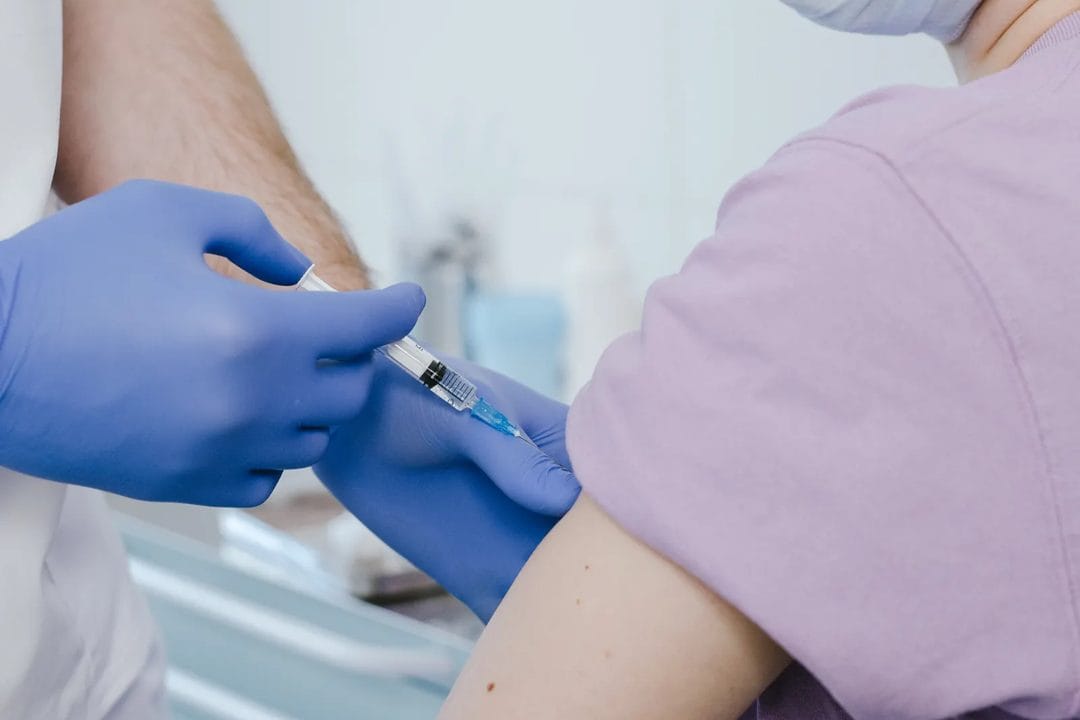
For most adults the vaccine is injectable, given as a single dose in the upper arm; most children get the nasal spray instead, which tends to be less unpleasant for younger kids and doesn't require a needle. Neither formulation contains a live virus capable of causing flu, so the vaccine itself cannot give you the illness it's meant to prevent — any symptoms afterwards, like a sore arm or mild tiredness, are the immune system responding rather than an infection taking hold.
Here's the nuance that gets glossed over in most flu-jab explainers: the vaccine doesn't guarantee you won't catch flu at all. Each year's formulation is built from World Health Organization predictions about which strains are most likely to circulate, made months in advance, and some seasons the match between prediction and reality is closer than others. What the jab reliably does — even in a season where the strain match is imperfect — is cut your chances of the illness turning into something severe enough to need hospital treatment. That's a different promise to "you won't get flu," and it's the one the NHS's own hospitalisation figures are actually measuring.
Who should hold off, and what to check first
You should avoid the vaccine only if you've previously had a serious allergic reaction — anaphylaxis — to a flu vaccine or one of its ingredients; this is genuinely rare, and for almost everyone eligible there's no reason to hesitate on safety grounds. Some formulations contain egg protein, which matters if you have an egg allergy — flag this when you book, since egg-free formulations exist and your GP or pharmacist can steer you to the right one rather than you having to work it out yourself. If you're feverish or generally unwell on the day of your appointment, the standard advice is to wait until you're feeling better rather than turning up regardless; a mild cold isn't usually a reason to cancel, but a temperature is. None of this is something you need to diagnose yourself before booking, either — mention any allergy or reaction history when you make the appointment, whether that's through the app, on the phone to 119, or at the pharmacy counter, and whoever's giving the jab will work it out with you on the day. The system is built to catch these cases at the point of booking, not to leave you guessing beforehand.
None of this requires research on your part beyond checking which of the eligibility categories you fall into. The booking system is open, October slots are filling from a standing start, and the paperwork — egg allergies aside — is about as simple as NHS admin gets.