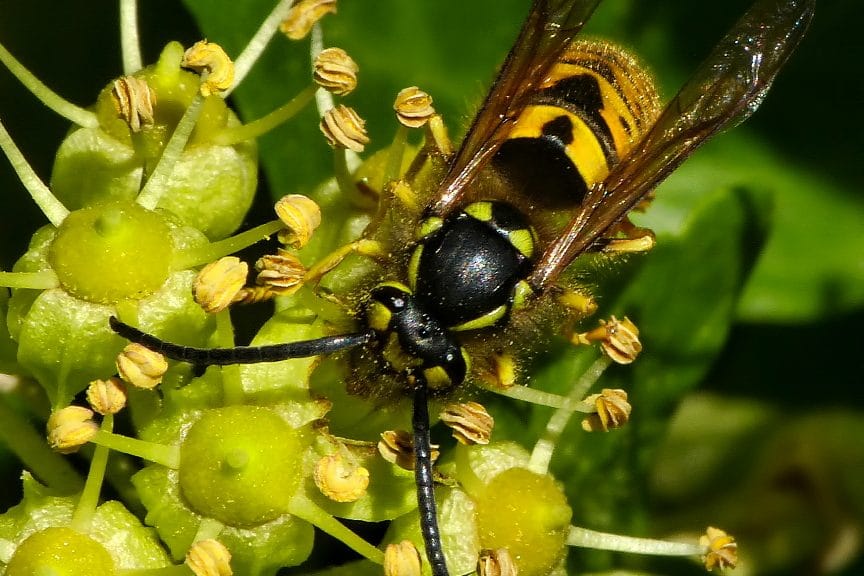
You're eating outside, a can of something fizzy has been sitting open on the table for ten minutes, and out of nowhere there's a sharp, hot pain on your lip. A wasp has crawled inside the can without anyone noticing. It happens to almost everyone at some point during a British summer, and if this year feels worse than most, that's not just you being unlucky — wasp numbers swing wildly from one year to the next, and a mild spring followed by a warm, dry summer is close to the perfect recipe for a bumper season.
Most stings are painful, unpleasant, and gone within a day or two. A small number aren't, and knowing the difference matters far more than knowing which folk remedy your gran swore by. This is the practical version: what's actually going on when you're stung, what counts as a normal reaction versus one that needs attention, and what NHS guidance actually recommends rather than what gets repeated at barbecues.
Why wasps get worse as the summer goes on
Early in the season, worker wasps are mostly useful. They spend their days hunting caterpillars, flies and other insects to feed the larvae back in the nest, and in return the larvae produce a sugary secretion that the workers feed on. It's a functioning trade, and it keeps wasps largely uninterested in your picnic. That changes from around late July onwards, once the queen stops laying new eggs and the larvae population starts to shrink. The workers lose their sugar supply from the nest and go looking for it elsewhere — which is exactly when they start turning up around bins, fruit, and anything you're drinking outdoors. A single mature nest can hold several thousand workers by August, all switching over to scavenging mode within roughly the same few weeks, which is why the sudden increase feels less like bad luck and more like a switch being flipped.
A warm spring adds another factor on top of that seasonal shift. Queens that survive winter in good condition establish nests earlier and the colonies grow larger before the summer dip in food arrives, so more wasps reach that scavenging phase at once. None of this makes wasps more aggressive in any deliberate sense — they're not angrier, just hungrier and more numerous at the exact time people are eating and drinking outside.
What's actually happening when you're stung
A wasp or bee sting injects venom directly into the skin — a mix of proteins that trigger pain receptors immediately and prompt the body's immune system to release histamine at the site. That's what causes the redness, heat and swelling: not damage from the sting itself, but your own immune response reacting to the venom. For most people that response stays local and predictable. Expect a sharp pain that fades to a dull ache within an hour, a small raised welt, and mild itching that settles within a day, sometimes two.
Bees are the exception worth knowing about. A honeybee's stinger is barbed, so it tears free and stays lodged in the skin along with the venom sac, which is why bees die after stinging and wasps don't — a wasp can sting repeatedly. If you can see a stinger left behind, that's a bee sting, and it changes what you should do next.
When a reaction stops being normal
There's a meaningful difference between a large local reaction and a genuine emergency, and it's worth being precise about it rather than guessing.
A large local reaction is still not dangerous, even though it can look alarming. The swelling spreads well beyond the sting site — sometimes covering an entire hand, forearm or lower leg — and it can keep expanding for a day or two before it starts to go down over the following several days. It's uncomfortable and worth watching, and a GP or pharmacist can advise on managing it, but it isn't anaphylaxis. The reaction that actually needs 999 is systemic: swelling of the face, lips, tongue or throat; difficulty breathing or wheezing; a fast heartbeat; dizziness or fainting; or a widespread rash appearing away from the sting site. That combination can develop within minutes of the sting, and it's a medical emergency every time it happens, not something to wait out at home to see if it settles. If in doubt, call 999 rather than driving yourself or someone else to A&E — an ambulance crew can start treatment the moment they arrive, and a reaction like this can worsen quickly in a car.
One detail that surprises people: the risk of a serious allergic reaction is highest not on the first sting of the season but if a second sting happens two to eight weeks after the first one, while the immune system is still primed. Someone who's been stung twice within that window and had any reaction beyond mild local swelling the second time round is worth taking seriously, even if the first sting was completely unremarkable.
What actually helps in the first ten minutes
NHS guidance is fairly simple, and most of it is about not making things worse rather than doing anything clever. Move away from the area calmly rather than swatting — a disturbed wasp nest, or even a single agitated wasp, is far more likely to sting again if you're flapping at it, and unlike a bee, it can keep doing so. Wash the site with soap and water. If there's a visible stinger, scrape it out sideways with something flat and hard-edged — a fingernail or a bank card works — rather than pinching it with tweezers, which can squeeze more venom out of the sac and into the skin.
After that:
- A cold compress for ten to fifteen minutes brings the swelling down faster than almost anything else you'll find in a bathroom cabinet.
- An antihistamine tablet helps with itching and swelling if it's more than mild — ask the pharmacist which one suits you, since some, like chlorphenamine (Piriton), cause drowsiness and aren't a great idea before driving.
- Paracetamol or ibuprofen for pain, taken as normal.
- Keep an eye on the area over the next 24 hours, and see a GP if it's still spreading after two days, feels hot and increasingly painful rather than settling, or shows any sign of infection.
Don't reach for a plaster or dressing straight away unless the skin's broken — sealing a fresh sting under a plaster traps heat and can make the swelling worse rather than protecting anything.
The myths worth retiring
The vinegar-for-wasps, bicarbonate-of-soda-for-bees advice has been repeated at enough barbecues that it sounds like it must be based on something, and it is, technically: bee venom is mildly acidic and wasp venom mildly alkaline, so the theory goes that the opposite substance neutralises it. In practice it doesn't hold up, because venom is injected under the skin within a fraction of a second, well below anything a vinegar-soaked cotton wool ball on the surface can reach. Any relief people feel is more likely the cooling sensation of a damp cloth than actual chemistry doing anything useful.
Dock leaves fall into the same category — a cool, damp leaf pressed against a sting feels soothing for the same reason a cold compress does, not because of anything in the plant itself. And the idea of sucking venom out of a sting, borrowed from old snake-bite folklore that's now considered unreliable even for snakes, does nothing for a wasp or bee sting: the venom is already in the tissue by the time you'd think to try it, and there's no wound to draw it back out of.
If you're someone who reacts badly
For most people, none of this matters much beyond a day of mild annoyance. For the roughly 2% of the UK population with a diagnosed insect venom allergy, it matters a great deal, and prevention becomes worth the minor inconvenience. Anaphylaxis UK's advice is straightforward: keep arms and legs covered outdoors during the warmer months, skip bright florals and perfume near flowering plants, avoid going barefoot or wearing sandals in the garden, and don't leave food or drinks uncovered where a wasp can crawl in unseen. If a nest turns up in a shed, loft or garden wall, leave it to a pest control company or the local council rather than attempting to move or destroy it yourself — disturbed nests can produce a defensive response from dozens of wasps at once.
Anyone who's had a whole-body reaction to a sting before — hives away from the site, breathing difficulty, or worse — should be carrying an adrenaline auto-injector and should have been referred to an allergy clinic for proper testing, not just handed a prescription and sent on their way. Getting that referral is the single most useful thing to chase up with a GP after a bad reaction, and it's the one recommendation in this article that isn't really optional.