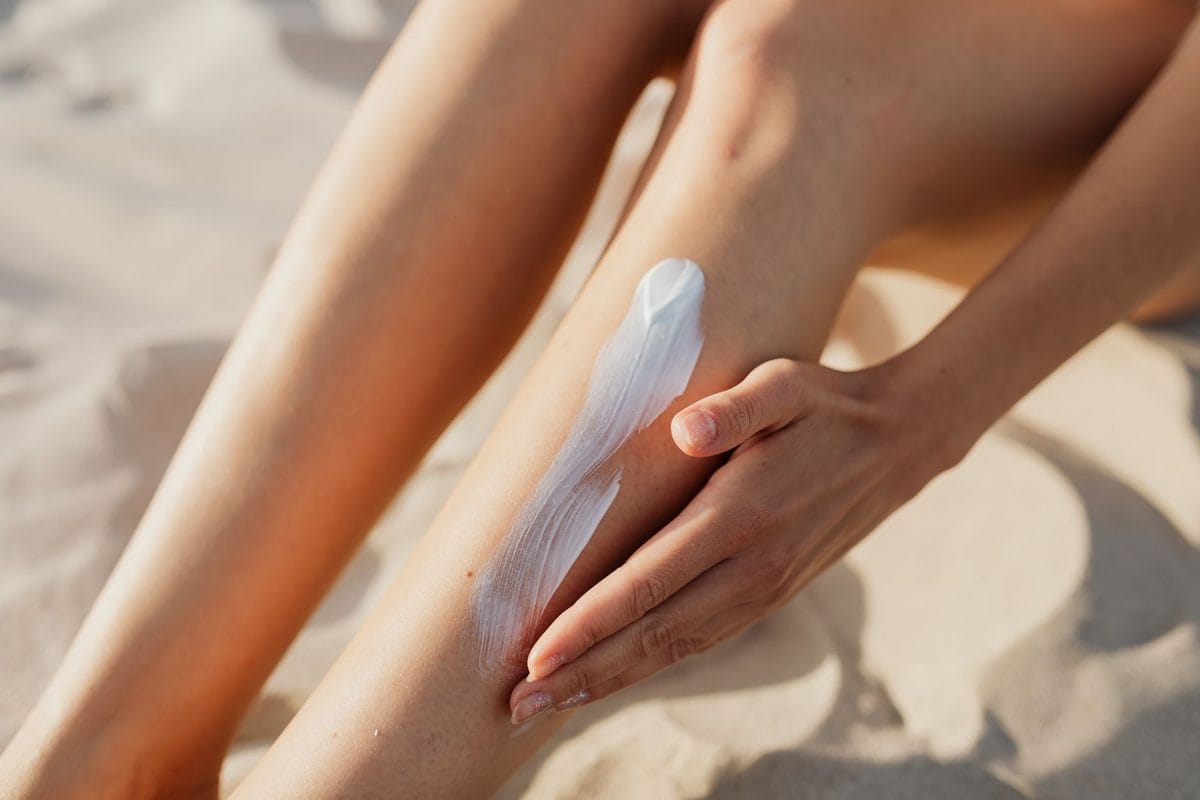
You've smoothed on factor 50, packed the kids into the car for a day at the coast, and you don't think about sunscreen again until bedtime. That's usually the exact moment people get burnt — not because the product failed, but because of what they assumed it was doing in the first place. SPF is one of the most misread numbers on any pharmacy shelf, and the gap between what shoppers think it means and what a laboratory actually measures is wide enough to leave a fair few red shoulders on Cornish beaches every August.
None of this is really the shopper's fault. A number stamped on a bottle looks precise, so it's natural to assume SPF 50 gives twice the protection of SPF 25, or that once it's rubbed in you're covered until the tide turns. Neither assumption holds up, and the difference matters more than usual this year, with the UK working through another run of late-summer heatwaves that keep people outdoors, in short sleeves, well past the point where most of them stopped thinking about reapplying.
What the SPF Number Actually Measures
SPF stands for Sun Protection Factor, and it measures one specific thing: how much longer your skin takes to redden with the product on, compared with bare skin, under UVB rays in laboratory conditions. It says almost nothing about UVA, the wavelength responsible for most premature ageing and a large share of skin cancer risk, which is exactly why the number on the front of the bottle is only half the story. The percentages behind the marketing are far more useful than the SPF figure itself: SPF15 filters out roughly 93% of UVB radiation, SPF30 around 97%, and SPF50 about 98%. Jump from SPF30 to SPF50 and you're buying barely one extra percentage point of filtration, not the dramatically stronger protection the higher number implies.
The British Association of Dermatologists recommends SPF30 as the practical minimum for UK daily wear, with SPF50 reserved for fair skin, holidays abroad, or long days on the water. Buy whichever sits in that range and suits your skin — an SPF70 sunscreen from a premium brand isn't meaningfully safer than a supermarket own-brand SPF30 costing a third of the price, and treating the number as a competition misses what actually determines whether you burn.
Most People Apply Half the Sunscreen the Laboratory Used
Most people apply about half of what earned that SPF rating in the first place.
Laboratories test sunscreen at a thickness of 2 milligrams per square centimetre of skin, a benchmark that works out to roughly two teaspoons — about 35ml — for an average adult body in swimwear, plus a further half a teaspoon for the face and neck alone. That's a genuinely thick, almost visible layer, closer to how a make-up primer sits on skin than how most people picture "putting sunscreen on." Real-world studies of how people actually apply the stuff put the typical layer at somewhere between a quarter and a half of that laboratory amount, thinly rubbed in until it disappears because nobody wants to spend the day looking chalky. Halve the thickness and the effective protection roughly halves with it, so an SPF50 applied thinly can end up behaving closer to an SPF20 or SPF25 once it's actually on your skin rather than in a lab dish. None of this means the product is faulty or the SPF claim is dishonest — it means the number on the bottle describes a specific, generous quantity that almost nobody actually uses. A 200ml bottle of Ambre Solaire or Boots Soltan should realistically be gone within four or five full-body applications for one adult, and if a bottle is somehow lasting a whole family a fortnight in Cornwall, everyone in that family is almost certainly under-applying it by a significant margin.
The Two-Hour Rule Isn't Optional, and a Higher Number Doesn't Buy You More Time
Sunscreen isn't a coat of paint. UV exposure itself breaks down the filters inside the product, sweat and water physically lift it off the skin, and towel-drying removes a layer wherever the towel touches. The NHS and the British Association of Dermatologists both recommend reapplying every two hours regardless of the SPF number on the bottle, and immediately after swimming, sweating heavily, or towelling off. An SPF50 applied at nine in the morning and never touched again gives you nothing close to SPF50-level protection by early afternoon, no matter how expensive the bottle was.
This holds for most ordinary days at the beach or in the garden — unless you're an open-water swimmer, a gardener working up a real sweat, or someone doing physical labour outdoors, in which case even a "water-resistant" formula needs topping up closer to every hour. Water-resistance ratings are tested in a controlled pool over 40 or 80 minutes of continuous swimming, not a choppy sea swim or a shift spent digging borders in July heat, and treating that rating as an all-day guarantee is one of the more expensive mistakes people make with an otherwise good product.
UVA, Cloud Cover, and the Myth That British Weather Lets You Off
Cloud blocks a meaningful share of UVB, the ray responsible for visible burning, and that's exactly why an overcast day in Brighton or Aberdeen feels like a day off from sunscreen. UVA tells a different story: it passes through cloud, and through window glass, almost entirely unaffected, which is why people can end up with noticeably aged, sun-damaged skin from years of driving or sitting near an office window without ever once looking sunburnt. UVA is the wavelength most responsible for premature skin ageing and contributes heavily to skin cancer risk, and it does its damage quietly, without the early warning sign of a red, sore burn to tell you it's happening. That absence of an obvious signal is precisely what makes UVA the wavelength British sunscreen shoppers underestimate the most. Look for the UVA logo — a circle with "UVA" printed inside it, an EU standard requiring UVA protection of at least a third of the labelled SPF value — and check the star rating British brands such as Boots Soltan and Nivea Sun print on the bottle, where four or five stars signals strong, broad UVA filtering alongside whatever the SPF number promises on the UVB side. Skipping that check and buying purely on the SPF number is how someone ends up with excellent burn protection and comparatively weak defence against the exact rays doing most of the long-term damage.
Choose a sunscreen with both a solid SPF and a high UVA star rating rather than optimising for one number and ignoring the other; Ultrasun, La Roche-Posay Anthelios and Garnier Ambre Solaire all sell UK formulations that do both well, at price points from roughly £8 to £28 depending on the range.
Darker Skin, Melanin, and a Confidence Gap That Costs People
One of the most persistent myths in UK pharmacies is that people with darker skin tones don't need sunscreen at all. Melanin does offer some natural protection — commonly estimated at somewhere around an SPF2 to SPF4 equivalent — and that's real, but nowhere near enough to offset several hours of direct UK summer sun, let alone a fortnight abroad. Because melanoma and other skin cancers are diagnosed less often in people with darker skin, dermatologists in the UK have repeatedly flagged a pattern where those cancers, when they do occur, tend to be caught later and treated with a worse outlook — partly because sunscreen use is lower, and partly because early warning signs are checked for less often on skin where a red, visible burn was never expected in the first place. Cancer Research UK and the NHS have spent years pushing the message that there's no such thing as a safe tan, and that message applies regardless of how much natural melanin protection someone starts with.
Everybody benefits from daily SPF30 during British spring and summer months, and the old complaint about sunscreen leaving a chalky white cast has genuinely been solved by most major brands — tinted mineral formulas are now standard stock at Boots and Superdrug, not a specialist import you have to hunt for.
Expiry Dates Aren't Marketing — the Chemistry Actually Breaks Down
The little open-jar symbol on the back of a sunscreen bottle, usually marked "12M" or "24M", isn't decoration. Both chemical filters, which absorb UV and convert it to heat, and mineral filters, which sit on the skin and scatter UV, degrade with heat, air, and time, and a bottle that spent last August rattling around in a car boot on the hottest days of the year has likely broken down faster than one kept in a cool bathroom cabinet. Using a sunscreen from two summers ago that's been through several heatwaves in storage is a common and largely invisible way that otherwise sensible people end up burnt despite doing everything else right.
- Buy a fresh bottle each spring rather than finishing last year's leftovers from the back of the glovebox.
- Store sunscreen somewhere that doesn't bake in direct sun — a beach bag left in full sun for six hours does the product no favours.
- If the texture has separated, gone gritty, or changed colour, that bottle has likely lost a meaningful share of its labelled protection, and it belongs in the bin rather than back in the bag, among other warning signs worth checking for.
What Actually Works
Buy a broad-spectrum SPF30 or SPF50 with a four- or five-star UVA rating, and don't overthink the brand — a £4 supermarket own-label product tested to the same British and EU standards filters UV just as reliably as a £30 one from a premium skincare counter. Apply roughly two teaspoons for the body and a separate half-teaspoon for the face and neck, reapply every two hours without exception, and treat swimming, heavy sweating, or towelling off as an automatic cue to put more on regardless of what the clock says. Wear it daily from March through October in the UK, cloud or no cloud, and replace the bottle each year rather than trusting one that's already lived through a heatwave in a hot car.
The best sunscreen on the market isn't the one with the highest number printed on the front. It's the one that's still in the beach bag by three o'clock, half empty, lid gritty with sand, because somebody actually put it back on.